The Brain Day games
The Brain Day app holds 57 short games, sorted into 7 programs by skill. Here are 15 of them, each one built on a classic task from cognitive research. Open a game, play it live in your browser, and see what it asks of you, where it comes from and what it does on your weekly card.
The six daily games
Every day the app picks three of them, one per stat, for your daily routine. They are the games that build your weekly card.
Bonus and reasoning
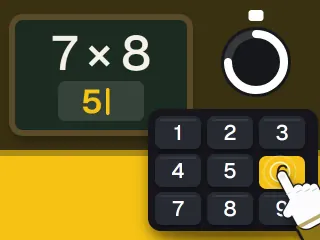
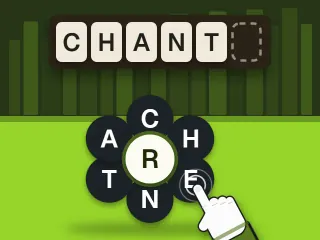
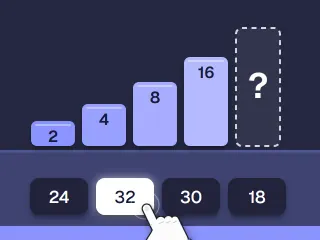
Quick Math and 7 Letters come back in the bonus of the day, and Logic closes the routine with a series to think through. Pure practice, never graded.
Lab games
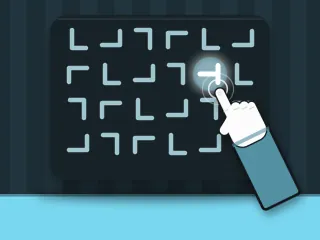
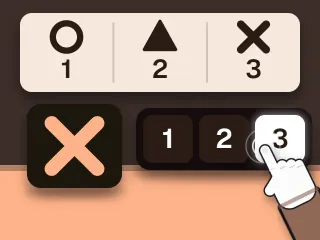
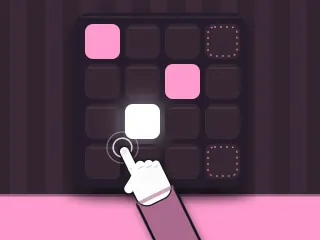
Three research classics in free play, visual search, symbol coding and pattern memory. Never graded, there to explore.
Season games
One new game per season. Each one starts in free play and joins a stat once its reliability is measured.
Short games, one skill each
Each Brain Day game takes 20 to 90 seconds and works one precise skill, reaction speed, memory, focus, visual search or reasoning. Short on purpose, so a round fits in the moment you would have spent scrolling.
The research behind that choice is solid. Practising a task makes you sharper at that task (Simons et al., 2016), and scores on a repeated cognitive test rise with practice (Scharfen et al., 2018a). Every game page names the classic task it comes from, with its source.
From the games to your card
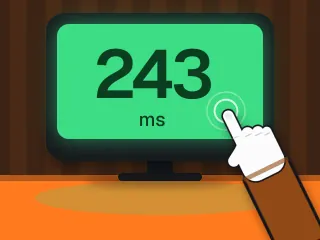
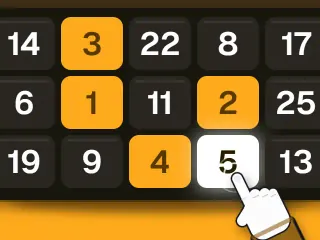
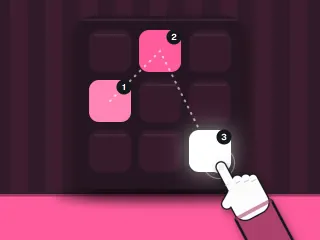
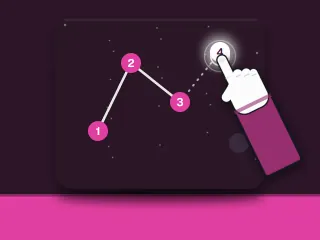
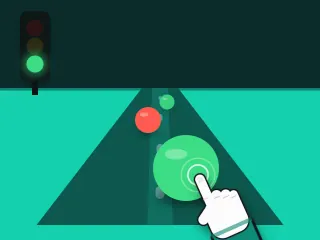
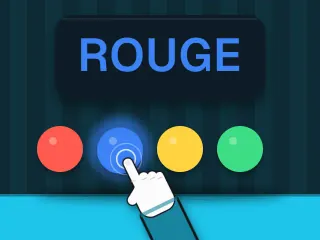
Six games feed the three brain stats of your weekly card, two per stat. Duel and Grid for Reflexes, Sequence and Constellation for Memory, Go/no-go and Color for Focus. Every day the app picks one game per stat, on a calendar that is the same for every player.
Your card also holds three discipline stats, fed by your phone down sessions. On Sunday the six become figures from 1 to 99, an overall score and a rank. The other games are there to play and never count on the card, until a season game proves its reliability and joins a stat.
Sources
- Simons D.J., Boot W.R., Charness N. et al. (2016). Do brain training programs work? Psychological Science in the Public Interest 17(3), 103 to 186. doi.org/10.1177/1529100616661983
- Scharfen J., Peters J.M., Holling H. (2018). Retest effects in cognitive ability tests, a meta-analysis. Intelligence 67, 44 to 66. doi.org/10.1016/j.intell.2018.01.003
Brain Day
Your full card, every Sunday.
A daily routine in under 3 minutes, 57 games in 7 programs, phone down sessions, and a card with six stats revealed every Sunday. Coming soon to the App Store, Google Play next.
Join the waitlist